Tuesday, February 15, 2011

सातबुँदे सहमतिको अर्थ, मर्म र सन्देश

जनयुद्धमा महारथ प्राप्त भए पनि उनीहरू र उनीहरूका ‘गडफादर’हरूले टेबुल सङ्घर्षमा सधैँ माओवादीलाई पछार्दै आएका हुन् । विगत पाँच वर्षको तीव्र राजनीतिक छिनाझप्टीमा हरेकपल्ट माओवादीको नयाँ पहलले मात्र उनीहरू चित खान्थ्यो, बल्ड्याङ खान्थे । यो अवधि रक्तविहीन सङ्घर्षको वेगमय समय थियो । आफ्नो मार्गचित्र अनुसार माओवादी नहाँकिने देखेपछि आफ्नै घोषित मूल्य, मान्यतालाई पनि उनीहरू धोती लगाउन पुग्दारहेछन् भन्ने कुरा सातबुँदे सहमतिले शान्ति र संविधानको सुनिश्चितता गरेपछि झन् प्रस्ट भयो ।

एमाले र माओवादी नेतृत्वबीचको सातबुँदे सहमति आफू फेरिन नचाहने र अरूसँग मुर्कुट्टेहिँडाइको आशा र अपेक्षा गर्नेहरूको लागि अहिले पोटासियम साइनाइड नै बनेको छ । चाखौँ भने इहलीला समाप्त हुने, नचाखौँ भने अमिलो छ कि गुलियो थाहै नहुने । नमानौँ शान्ति र संविधान विरोधी जगजाहेर भएर प्रमाणित हुने, मानौँ भने स्वर्गीय सम्भावना गुम्ने । सातबुँदे सहमतिको मर्म र कर्मलाई कति थेग्न र तान्न सक्छन् अब भने एमाले अध्यक्षको लागि अर्को मौका र अग्निपरीक्षा बनेको छ ।

By नरेन्द्रजंग पिटर

विगतका लामा कालखण्डमा चालबाजी, धुर्त्याइँ र पाखण्डपनमा सनातनी दीक्षित एमाले-काङ्ग्रेसको परिचय र पहिचान बनिसकेको थियो । केही ‘रेडिकल’ व्यक्तित्वलाई छाड्ने हो भने आग्रहले लतार्दा उनीहरूले अग्रगामी सोच राख्ने क्षमता गुमाउँदै गएका थिए । जनयुद्धमा महारथ प्राप्त भए पनि उनीहरू र उनीहरूका ‘गडफादर’हरूले टेबुल सङ्घर्षमा सधैँ माओवादीलाई पछार्दै आएका हुन् । विगत पाँच वर्षको तीव्र राजनीतिक छिनाझप्टीमा हरेकपल्ट माओवादीको नयाँ पहलले मात्र उनीहरू चित खान्थ्यो, बल्ड्याङ खान्थे । यो अवधि रक्तविहीन सङ्घर्षको वेगमय समय थियो । आफ्नो मार्गचित्र अनुसार माओवादी नहाँकिने देखेपछि आफ्नै घोषित मूल्य, मान्यतालाई पनि उनीहरू धोती लगाउन पुग्दारहेछन् भन्ने कुरा सातबुँदे सहमतिले शान्ति र संविधानको सुनिश्चितता गरेपछि झन् प्रस्ट भयो । बाधा पुर्‍याउन निमित्त कारण उछाल्न फेरिन नचाहनेहरू नै अरू फेरिएनन् भनेर अर्का कोकोहोलो मच्चाउँदै छन् । यो कोकोहोलो उनीहरूको आत्मिकपीडा त हुँदै हो, त्यसभन्दा पनि उद्देश्य र योजना भनेको अग्रगामी नेपाली जनमतमा भ्रम सिर्जना गर्नुमा नै देखिन्छ । काङ्ग्रेस-एमालेभित्रका ‘रेडिकल फोर्स’ कि त यस गम्भीर अवस्थाप्रति उदासीन छ कि त आग्रहमा उनीहरू पनि फसेका छन् ।

एमाले र माओवादी नेतृत्वबीचको सातबुँदे सहमति आफू फेरिन नचाहने र अरूसँग मुर्कुट्टेहिँडाइको आशा र अपेक्षा गर्नेहरूको लागि अहिले पोटासियम साइनाइड नै बनेको छ । चाखौँ भने इहलीला समाप्त हुने, नचाखौँ भने अमिलो छ कि गुलियो थाहै नहुने । नमानौँ शान्ति र संविधान विरोधी जगजाहेर भएर प्रमाणित हुने, मानौँ भने स्वर्गीय सम्भावना गुम्ने । सातबुँदे सहमतिको मर्म र कर्मलाई कति थेग्न र तान्न सक्छन् अब भने एमाले अध्यक्षको लागि अर्को मौका र अग्निपरीक्षा बनेको छ । विगतदेखि नै उनलाई लाग्दै आएको आरोप, गर्दै गरिएको लाञ्छना भनेकै ‘अडान नभएको, ढुलमुले र शक्तिहीन नेताको हो’ । तेस्रो ठूलो दलको मूल नेतृत्व माथिको यो आरोप चानचुने थिएन । अहिले भने आरोपबाट मुक्ति र सातबुँदेको सार्थकतामा उनले खेल्ने भूमिकालाई देश र दुनियाँले नियालिरहेको छ । समस्याको निकास र निदान भरपरेको विषय पनि हो यो । आरोपलाई उनले मिथ्या सावित गर्ने अवसरका रूपमा कति उपयोग गर्छन्, यसैमा उनको भावी राजनीतिक जीवन, इतिहासले गर्ने दया, शान्ति सम्झौताको सार्थक परिणाम र अग्रगामी परिवर्तनको दस्तावेज संविधानको निर्माण भर पर्दछ । जस्ालाई फेरिएको नाटक गर्नु थियो र जनतालाई मूर्ख बनाएर गद्दी सुरक्षित हुन्छ भन्ने थियो, आज तिनीहरू फेरि अर्काे रूप र रङ्गमा सल्बलाइरहेका छन् । मुख्य कुरा त्यसको पहिचान र प्रतिकार नै हो ।

संसारकै प्रतिक्रियावादीहरूले अहिले नेपालको सन्दर्भमा नारा लगाइरहेका र भूमिका खेलिरहेका छन्: ‘दुनियाँकै यथास्थितिवादी, प्रतिक्रयावादी, थैलीशाहहरू एक हौँ, नेपालका विचारसहितका अग्रगमनकारी विरुद्ध जाइलागौँ ।” त्यो ‘सिण्डिकेट’ले विभिन्न पार्टी, संस्था र आवरणमा रहेका आफ्ना दूतहरूलाई उचालिरहेको छ । भरथेग गरिरहेको छ । बहस सर्जकहरू, ‘माइन्ड मेनेजर’हरू र ‘मिडिया’हरूमा यत्रतत्र देख्न सकिन्छ । सामान्यजनमा भ्रम फैलाउनु, भय दोहन गर्नु, निराशा फैलाउनु अर्कातर्फ हरेक पार्टीभित्र घुसपैठ गर्नु आपसी वैरभाव सिर्जना गर्नु, तोडफोड गर्नु, मौलिक चिन्तन र स्वाभिमानी सक्रियता हुन नदिएर पराश्रति बनाइदिनुमा त्यस ‘सिन्डिकेट’को मुख्य अभियान केन्दि्रत देखिन्छ । उनीहरूले बुझेका छन्: सबै विषयको केन्द्र विचारसहितको सक्रियता हो । आन्तरिक र बाहृय क्षेत्रमा । कोही उपदेशकका रूपमा देखिएका छन् भने कोही अन्तरध्वस्त गर्ने दाउपेच खेलिरहेका छन । सबैको केन्द्र सोही ‘सिन्डिकेट’ हो । रूप, वचन र भूमिकामा जो-जस्तोसुकै आवरणमा पनि देखिन सक्छ, झुल्किन सक्छ । कोही आदर्शको वकालतमा देखिँदैछ- सकियो, भत्कियो, ध्वस्त भयो भन्दैछ भने अर्का कोण कोही उग्रता र जडताको आरोपमा । पेचिलो बन्दै गएको आन्दोलनले भने तिमी तिम्रो तरिकाले लड, हामी हाम्रै तरिकाले लड्छौँ भन्दै अघि बढ्दो छ ।

विश्व मानचित्रमा जमिनको आकारमा ९३ औँ स्थानमा पर्ने यो भूपरिवेष्टित भूगोलको आफैँमा एउटा सानु आकारको सार्वभौम राष्ट्र हो तर यसको सामरिक महत्त्व भने चानचुने छैन । त्यसैले यो मुलुक अहिले सबै वर्ग, विचार, अभियानको प्रयोगशाला बन्दैछ । आमूल परिवर्तनकारीहरूलाई आशा बनेको छ भने त्यो सिन्डिकेटलाई आतङ्क बनेको छ । आˆनै खुट्टामा उभिएको हेर्न नचाहने वा उभिन हुति नभएकाहरूको भने माओवादीप्रति दुइटा आरोप छ । ऊ फेरिएको छैन र विश्वसनीय छैन । छुतको रोगले नसमातेका सामान्यजनले यो के, कसरी र कसका लागि भन्ने प्रश्नको गहिराइमा पुगेदेखि मात्र आमूल परिवर्तनको दिशा र दशा खुट्याउन सक्छन् नत्र रणभुल्लमा जो कोही पनि पर्न सक्छ । अब प्रश्न उठछ- फेरिनु र विश्वसनीय हुनु भनेको के हो भन्ने । त्यो भनेको माओवादीहरू कुलीन, थैलिशाह, यथास्थितिवादी र विदेशी निर्देशकहरूको अरोटमा हाँकिनु हो । परिवर्तनका युगान्तकारी नारालाई बेवारिसे छोडिदिनु हो । बिर्सिनु हो । ‘बाबा की दुहाई’ भन्दै माओवादीले अब ती नारा र कार्यक्रम लागु गर्नु त के, सपनीमा पनि सोच्दैनौँ भन्नु हो । ‘प्रभु’को मार्गचित्रमा हाँकिन्छौ भन्नु हो । सूत्रमा हाँकिनु र सपना एवं प्रतिबद्धता विर्सजनमा हो । अथवा जडतामा हाकिएर पेरूका कम्युनिस्टको हविगत ब्यर्होनु हो अथवा सिर्जनात्मक बन्ने नाममा वर्गबैरीसँग आत्मसमर्पण गरेर ‘अफिसियल कम्युनिस्ट’मा दरिनु हो । हिन्दीमा एउटा उखान छ. ‘मिया की जुती मियाँ की सर’ अथवा, जसको हतियार उसैमाथिको प्रयोग । त्यसै भएपछि सबैखाले पात्र, प्रवृत्ति र शक्तिहरूको मथिङ्गल खराब भएको छ । उनीहरू तिल्मिलाएका छन् । वर्गसङ्र्घषको यो पेचिलो मोड कस्ौले जोखना गरेको भन्दा भिन्न तरिकाले आइदियो । बहसको केन्द्र र आन्दोलनको मुख्य भाग बनिदियो । सबै सबैलाई कित्ताकाट गरिदियो । त्यसैले सो सिन्डिकेटको अभियान अहिले सातबुँदे सहमतिलाई कसरी तुहाउने, अपव्याख्या र मूल स्पिरिट ध्वस्त पार्नेमा रहेको छ ।

सातबँुदे सहमति अहिले सनातनीहरूलाई काउसोको माला बनेको छ भने एमाले अध्यक्ष खनाललाई सत्ताप्राप्तिको तुरूप हो कि ? अग्रगमनसहितको शान्ति, त्यसको उचित व्यवस्थापनसहितको वैधानिक घोषणापत्र जारी गर्ने संविधान निर्माणको प्रतिबद्धता भन्ने प्रश्न तेर्सिएका छन् । जीवनमा उनलेे यस्तोे पहिलो कठिन परीक्षा दिँदैछन् । इतिहासमा के हुने- अग्रगमनको सारथि बन्ने कि विभिषणको पगरी गुथ्ने । यसै पनि जोखिमको यात्रामा रमाउने उनको स्वभाव होइन भने दृढ अडान नभएपछि लतारिने उनको नियति थियो, आरोप खेपिरहेकै हुन् ।

अग्रगमनसहितको शान्ति र सामाजिक रूपान्तरणको केन्द्रीय दस्तावेज संविधान बनाउने माओवादीहरूको अभियान हो । सामाजिक रूपान्तरण उसका आफ्ना ’एजेन्डा’ हुन् । उसलाई बेवारिसे छाड्न ऊ सक्दैन । राजनीतिक, सामाजिक, आर्थिक र सांस्कृतिक परिवर्तनका लागि युगले भुक्तान गरेको मूल्य उसका सम्पत्ति र मार्ग निर्देशक हुन् । विचारको अभ्यासको आधारमा टेकेर विकास गरेपछि मात्रै सम्भव छ र समयको सम्बोधन गर्न सकिन्छ भन्ने उसको हिजोदेखिको प्रयोग हो । पछिल्लो अभ्यासक्रममा अग्रगमनप्रतिको प्रतिबद्धताको एउटा खुड्किलोको सहयात्रा मात्रै सातबुँदे सहमतिपत्र हो । सरकार र मन्त्रीका ‘पोर्टफोलियो’ गौण विषय हुन्, सातबुँदे सहमतिको मूल ‘स्पिरिट’ प्रमुख सवाल हो ।

(लेखक एनेकपा माओवादीका सल्लाहकार हुन् )

The Real Egyptian Revolution is yet to come


by George Katsiaficas*

(February 14, Boston, Sri Lanka Guardian) Around the world, people are enthusiastically greeting the “Egyptian Revolution”—the astonishing victory won by the historic 18-day People Power Uprising. As events move more rapidly than anyone can anticipate, not only has Mubarak been deposed, his corrupt parliament has been dismissed and new elections promised within six months. People’s ecstasy in the aftermath of these great victories belies the fact that Mubarak’s authoritarian system remains intact—nay, strengthened—by the ascension of Suleiman and the military to supreme power in Cairo. While the world hails the Egyptian “revolution,” a more sober assessment of recent events would question the accuracy of that label, at least for now.

If we look at other countries for comparison (and there are many recent examples of People Power Uprisings suddenly ending the reign of longstanding authoritarian regimes), I am especially struck by parallels with Korea’s 1987 June Uprising, when for 19 consecutive days, hundreds of thousands of people illegally went into the streets and battled tens of thousands of riot police to a standstill. On June 29, the military dictatorship finally capitulated to the opposition’s demands to hold direct presidential elections, thereby ending 26 years of military rule.

As in Egypt on February 11, 2011, the man who made the announcement in Seoul on June 29, 1987 was none other than the dictatorship’s No. 2 leader. Roh Tae-woo went on to become the country’s new president after elections marked by both a bitter split between rival progressive candidates and widespread allegations of ballot tampering. People’s high expectations and optimism after the military was forced to grant elections turned into bitter disappointment. Throughout the country, new massive mobilizations were organized, during which more than a dozen young people committed suicide to spur forward the movement for change.

Like Suleiman, Roh was a long-time US asset with ties to a list of nefarious deeds. In 1996, Roh and his predecessor Chun Doo-hwan were convicted of high crimes, sent to prison, and ultimately ordered to return hundreds of millions of dollars they had illegally garnered. (Roh eventually returned around $300 million; Chun deceitfully pleaded poverty and, although thereby dishonored, he absconded with even more than that amount of Korea’s wealth.)

Roh was never linked to any direct act of sadism, but Suleiman is known to have personally participated in the torture of CIA rendered terrorist suspects. As “the CIA’s Man in Cairo,” he helped design and implement the American rendition program through which dozens of suspected terrorists were kidnapped, imprisoned and tortured. Suleiman took a personal hand in the torture of Australian citizen Mamdouh Habib. In his memoirs, Habib recounted one torture session of electric shocks, broken fingers and being hung from meat hooks that culminated in being slapped so hard that his blindfold flew off—-revealing Suleiman as the purveyor of the violence.

While Habib was innocent, another rendered suspect, Ibn al-Sheikh al-Libi, confessed to participation in training anti-US fighters and famously asserted under torture that ties existed between al-Queda and Saddam’s government in Iraq. That lie became one of Colin Powell’s most significant assertions to the UN Security Council when the US convinced much of the world to attack Iraq. When al-Libi later recanted and threatened to expose his lie, he “committed suicide” in a Libyan prison—coincidentally at the same time as Suleiman made his first ever visit to Tripoli.

For his extraordinary efforts on behalf of the US, Suleiman found his fortunes rise. Thanks to WikiLeaks, we know today that almost three years ago, the US was prepared to elevate him to the top slot in Egypt. According to a US diplomatic cable of May 14, 2007, entitled “Presidential Succession in Egypt,” Suleiman was to be named vice-president (as occurred on January 29, 2011).

The chief of the Egyptian armed forces, Field Marshal Mohamed Hussein Tantawi, like Suleiman and Mubarak, is a regime insider with long ties to the Pentagon. One U.S. Embassy cable released by WikiLeaks noted that, “Tantawi has opposed both economic and political reforms that he perceives as eroding central government power.” While Suleiman and Tantawi are clearly cut from the same cloth as Mubarek, my objection is not simply to these men but to the system they embody. For a genuine revolution to take place, Suleiman and his kind must be driven from power—even punished for their crimes—not elevated to the highest levels of government.

What the masses of Egyptians want is freedom from dictatorship and foreign domination. They want the right to participate in their own government and to do so freely, with a free press, and in a society where civil liberties are guaranteed. They want an end to the country’s poverty and to take back the mountain of wealth stolen by the super-rich.

As it seems that Korea’s democratization might hold possible lessons for Egypt, so might the Philippines in 1986. Less than a year after the first “People Power Revolution” sent long-time dictator Ferdinand Marcos into exile, Corazon Aquino’s new government shot to death 21 landless farmers who marched in Manila to demand she keep her promises for land reform. The Philippines today is plagued by increasing hunger, and more than three million children are underweight and underheight. In 1973, students in Thailand overthrew a hated military dictatorship after 77 people were gunned down in the streets of Bangkok. After a two-year hiatus, one of the most free periods in the history of Thailand, the military bloodily reimposed dictatorship and killed dozens of students. In Nepal in 1990, fifty days of popular protests during which 62 citizens were killed won a constitutional monarchy, but within a few years, the royal family again seized absolute power. A 19-day People Power Uprising in 2006 ended the monarchy altogether, but only after 21 more unarmed civilians had been killed by the forces of order.

No one can anticipate the outcome of what has been set in motion in Egypt, but historical antecedents may provide insight into possible outcomes. Will the blood of the 300 murdered citizens in Egypt, like the hundreds of martyrs of the 1980 Gwangju Uprising, water the tree of liberty? Or will their sacrifice grease the wheels as US banks and global corporations rush to replace “crony capitalism” with ever more profitable arenas for wealthy investors?

Young activists in Cairo remain camped in Tahrir Square—for now at least—where they have already had to stand up to the army’s attempt to clear them out. Remaining steadfast, they are calling for substantive reforms—for a new system and democracy worthy of the name. Even with Mubarak gone, so long as his military commanders and chief of intelligence remain in power, nothing like a revolution can be said to have transpired in Egypt.

For that to be said, rather than celebrating their victory from high positions of power, Suleiman and his buddies should themselves be guests in the very prisons where they were previously hosts. The full turning of the wheel of justice—a revolution in the true sense of the word—demands nothing less. The sites where Suleiman tortured Habib and al-Lidi should become public museums open to ordinary Egyptians to sadly recount the country’s decades of suffering under the US-backed dictatorship of Mubarak. Instead, unless the movement continues to propel the country forward, Suleiman’s torture chambers may be destined to be used against young activists whose only crime is to insist upon making reality what is today claimed by nearly everyone—a revolution in Egypt.

* About Author: George Katsiaficas, whose mother was born in Cairo, is a professor of humanities at Wentworth Institute of Technology in Boston. He is currently completing Asia’s Unknown Uprisings, a study of recent People Power uprisings. He can be reached atkatsiaficasg@wit.edu
@Guardian

Australian Prime Minister does it again!!

Muslims who want to live under Islamic Sharia law were told on Wednesday to get out of Australia , as the

Prime Minister Julia Gillard - Australia

government targeted radicals in a bid to head off potential terror attacks..

Separately, Gillard angered some Australian Muslims on Wednesday by saying she supported spy agencies monitoring the nation’s mosques. Quote:

‘IMMIGRANTS, NOT AUSTRALIANS, MUST ADAPT.. Take It Or Leave It.

I am tired of this nation worrying about whether we are offending some individual or their culture. Since the terrorist attacks on Bali , we have experienced a surge in patriotism by the majority of Australians. ‘

‘This culture has been developed over two centuries of struggles, trials and victories by millions of men and women who have sought freedom’

‘We speak mainly ENGLISH, not Spanish, Lebanese, Arabic, Chinese, Japanese, Russian, or any other language. Therefore, if you wish to become part of our society . Learn the language!’

‘Most Australians believe in God. This is not some Christian, right wing, political push, but a fact, because Christian men and women, on Christian principles, founded this nation, and this is clearly documented It is certainly appropriate to display it on the walls of our schools. If God offends you, then I suggest you consider another part of the world as your new home, because God is part of our culture.’

‘We will accept your beliefs, and will not question why All we ask is that you accept ours, and live in harmony and peaceful enjoyment with us.’

‘This is OUR COUNTRY, OUR LAND, and OUR LIFESTYLE, and we will allow you every opportunity to enjoy all this. But once you are done complaining, whining, and griping about Our Flag, Our Pledge, Our Christian beliefs, or Our Way of Life, I highly encourage you take advantage of one other great Australian freedom, ‘THE RIGHT TO LEAVE’.’

‘If you aren’t happy here then LEAVE. We didn’t force you to come here. You asked to be here. So accept the country YOU accepted.’

It took a lot of courage for this woman to speak what she had to say for the world to hear. The retribution could be phenomenal, but at least she was willing to take a stand on her and Australia ‘s beliefs.

Sunday, February 13, 2011

YOUR ONE VOTE CAN HELP US WIN 50,000 USD

DEAR FRIENDS,

Please help us win this competition with your vote. The 50,000 USD can change the face of our school.

Its simple. Go to the link below. Register in the top right corner and vote for us.

1) Register your username and e-mail at this official sitehttp://www.dellsocialinnovationcompetition.com/

2) Log-in using your e-mail and temporary password that will be sent to your e-mail.

3) Search for Sarswati on top right box. Ignore the first search option, and click ‘vote’ on the left hand side of the second search option PEACE SCHOOL (NEPAL).

You should then see ’1 vote’ under the Your profile on right hand side.

For more detail please click here .

Saturday, February 12, 2011

ALTERNATIVE ENERGY AND WOMEN IN RURAL NEPAL

By Dr. Ishara Mahat*

Mountain women in rural Nepal are heavily involved in managing the household energy system. Energy is needed forcooking, heating and processing grain and women often spend about 15 hours per week collecting fuelwood and 15 - 20 hours per week processing the grain needed for family meals. Access to electricity in rural areas of Nepal is just six percent. In 1996, the Rural Energy Development Programme (REDP) was launched to help the government of Nepal achieve its aims of sustainable development and alleviation of rural poverty. The programme aimed to take a holistic and participatory approach to development, including the empowerment of women, and has been recognized as a “best practice” programme in Nepal and internationally. Currently the programme is being implemented in 15 hilly districts in Nepal.

Implementation process

The Rural Energy Development Programme primarily focused on micro-hydropower schemes as an entry point to improve the rural energy situation. However, it also promoted solar panels, biogas plants and community development activities such as group savings, literacy programs, construction of roads and wells, dairy collection, poultry farming, mushroom and cardamom cultivation and goat keeping. Activities were implemented through the Village Development Committees, the lowest political and administrative units. The programme facilitated the community mobilization process encouraging women’s participation from the very beginning by forming community organizations of male and female groups.

The need for a micro-hydropower scheme in a particular village was identified at a higher level by the District Development Committee, which represents several Village Development Committees. Once the need was established at district level, an agreement was made between the programme and the local community to construct the micro-hydropower scheme. During the construction phase, each community organization was assigned different responsibilities such as carrying stones and sand or digging canals. Each community organization selected one member to represent it in the Village Energy Committee, where men and women were equally represented. The energy committee is responsible for continuously monitoring the activities, collecting electricity charges and managing funds.

of the first districts where the programme was implemented was Kavre, a central, hilly district of Nepal, lying approximately 35 km east of Kathmandu at between 1000 - 3000 metres altitude. The population in Kavre district is a mix of different ethnic groups including Brahmin/Chhetri, Newar, Gurung, Tamang, Tharu, Magar, Kami, Damai and Sarki, Bhojpuri and Limbu. There exist considerable differences in traditions and the culture of the different ethnic communities regarding women’s mobility, marriage options, access to resources and social status. Women’s mobility is very low, especially among high caste families, and they have little access to decision-making processes in household and community activities.

Pinthali village

Located in the eastern part of the district, Pinthali is one of the villages where micro-hydropower supported by the programme has brought about great change. This village is mainly comprised of a Tibeto-Burman Tamang community.

In Tamang society, women participate in decision-making processes at household level to a much greater degree than the higher caste Hindu women. Tamang men share some of the housework and encourage their women to participate in rural energy meetings. More importantly, the men share the knowledge and skills they gain from trainings with their women.

In Pinthali village, the micro-hydropower has been used to its full potential. The power plant has been used for providing electricity to 118 households and for operating a power mill with one huller, one grinder and one oil expeller. The power mill serves the women in Pinthali and also women in neighbouring villages. The mill has helped women reduce their workload, especially in hulling and grinding grain. With traditional technologies it takes four to five hours to hull 30 kg of grain; with the power mill this has been reduced to less than one hour, including travelling and waiting time. In addition, the water from the canal established for operating the mill is used for drinking water and irrigation. The irrigation system has increased vegetable production, especially garlic, income that normally goes to women.

Women were really happy to have lights in the kitchen, animal shed and in the toilets, which made them very convenient to work around. A woman mentioned that it was especially easy to take care of old and sick people when there is light. It was also mentioned that the risk of leopard attacks was minimized.

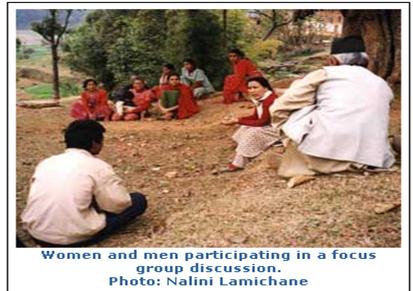
In a focus group discussion, women mentioned that before, they were very shy to talk with men from outside or to speak in a group of men, but as a result of the awareness programme, they now feel confident to talk with any men or women from outside. In addition, there was no restriction for girls and women to participate in community meetings, and even walk in the evenings (for instance going to each other’s house to watch TV). The men felt proud to have electricity in their village and enjoyed entertainment with friends in the evening lights.

Katunjebeshi village

Katunjebeshi is another village located in the eastern part of district closer to the Banepa-Bardibas highway. As the village is well connected with the road network, the communities, mainly consisting of higher caste Hindu Brahmin and Newar communities, are more involved in the market economy and less engaged in development activities at the village level. Higher caste Hindu women have greater access to technologies because they have greater purchasing power. However, in higher caste households (except women headed households) men are the decision makers and women are rarely involved in the choices regarding alternative energy technologies. Similarly, women’s participation in village energy committees was minimal among the higher caste women.

In Katunjebeshi, the micro-hydropower was only used for lighting. In this village, traditional processing technologies were only used occasionally since they have access to a diesel mill. In addition, the way the mill was constructed meant that village people could only make use of the water for irrigation when the mill was not operating. Only 45 households out of 65 were covered by the electrification and the power system, which was not well maintained. Some of the households did not use electricity because they could not afford to pay regular charges, while others could not contribute labour during the construction of canals.

Quite a few households installed biogas plants in this village, but they did not see much benefit from these plants. Especially the women who used biogas for cooking found it troublesome. The plants frequently needed repairs, technicians were unavailable when needed and it proved difficult to produce enough gas during the winter season to cook a complete meal. Contributing to the low appreciation of the biogas was that local people were not made aware of the full potential of the plants, such as the use of biogas slurry for making compost.

Implications for women

The Rural Energy Development Programme has, in general, had more positive impacts for women than for men, as women are the primary managers of household energy system. In general, women’s workloads were reduced. The saved time was not always visible as women were always occupied with additional work such as working in kitchen gardens, collecting more fuelwood to store and weaving mattresses.

However, impacts were not universally positive. Women mentioned that cooking takes longer with biogas than with fuelwood. Biogas plants require the collection of dung and water. The availability of electric light also meant the women could work for longer hours, for example waking up early to do additional work.

In many cases, children have more time for schoolwork with the electrical light, though this did not apply equally to all communities. Some women complained that with electricity, young boys became idle listening to radios and watching television. There was also some dissatisfaction among women and children in those households which were not able to access technologies like electricity.

As part of the programme, women have participated in more development activities, for example taking part in community meetings for awareness development, creating and mobilizing saving funds and participating in village energy committees. However, men participated more actively in the energy committees and they were able to visit other communities to learn more about the technologies.

The fact that energy planning activities are limited to the district level means that the diffusion of technologies such as biogas plants and solar photovoltaic systems was mainly based on the promotion of the technologies and the availability of subsidies, rather than the needs and priorities of local people. In the absence of community-based energy planning, women’s involvement in decision-making processes on issues such as technology installation and the location of plants is still very low.

Changing gender roles

Among all ethnic groups, grain processing is mainly the responsibility of women. However, with the introduction of alternative energy technologies, the division of labour started to change. Although the men never helped with the traditional grain processing technologies, they have started to join women in carrying the grain for milling to the nearest micro-hydro mill, so that the women do not have to wait a long time before bringing back the grain and flour. Similarly men, especially from the Tamang community, became involved in cooking with biogas stoves. The traditional stoves were used exclusively by women.

Potential for more women’s involvement

If tapped properly, the involvement of women in energy planning could improve women’s self-esteem and lead to the successful implementation of alternative energy technologies. Women have demonstrated good skills in mobilizing the community: Through their involvement in saving and credit groups, women were often able to motivate others to become involved in activities such as the construction of micro-hydro canals and the installation of biogas plants. In some cases, the women were then able to convince their husbands to support these ideas.

Women are very interested in participating in energy activities, though they have very limited spare time. They were especially interested in knowing about the proper use of these technologies and how to make small repairs, so they would not have to depend upon either technicians or other family members. Women could prove to be good technicians in constructing and promoting improved cooking stoves, which might help increase their adoption. However in most cases, men were trained for such purposes and women have had difficulties in maintaining the stoves. Similarly, involving women in deciding on the location of the biogas plant, where they must perform a number of operational tasks such as collecting and mixing water and dung, would have reduced women’s workload and encouraged them to adopt the biogas technology. Similarly, women should be involved in deciding the location of micro-hydro mills, where they travel for processing. They should also be made aware of the safety measures in using new energy technologies, since they are the ones who primarily stay around the house and supervise their children.

Conclusion

The rural energy programme with its focus on microhydropower has been of a great importance to local people, especially to women, in reducing their heavy workload. However, despite the fact that the new energy technologies have had positive impacts on local people’s quality of life, they are still not being used to their full potential.

The programme has been less successful in achieving its social objectives, like women’s participation and empowerment. Although local-level planning and participatory approaches are in the planning framework of the programme, much still needs to be done in practice in order to achieve equity and real participation and empowerment of people, especially women. For instance, participation of women in alternative energy initiatives has to be improved to provide sufficient space for women’s voices.

Ishara Mahat. Institute of Women’s Studies and Gender Studies, New College, 40 Willcocks Street, University of Toronto, ON M5S 1C6 Canada.
Email: i.mahat@utoronto.ca or Ishara_m@hotmail.com

References
- Rural Energy Development Program. 2000. Annual Report. UNDP Nepal.
- Rijal K. 1998. The relevance of renewable energy in mountains. In: Rijal K. (Ed) Renewable energy technologies: a brighter future. ICIMOD, Kathmandu, Nepal, pp. 1-22.

* Dr. Mahat is post-doctoral fellow and Professor at University of Ottawa, Canada and this is reposted from LEISA Magazine, Vol 21 (1) pp28-29

Friday, February 11, 2011

Presidential candidate pledges to get all unmarried Kazakh girls hitched

For video please click here

A presidential candidate in Kazakhstan has pledges to find a husband for every unmarried girl in the Central Asian state.

Amantai-Kazhi Asylbek has not yet explained how he will choose the perfect match for each girl. Nor has he said what he is going to do about girls who do not want to get married.

What he did say was that the money for the scheme will come from the state budget.

The presidential election in Kazakhstan is scheduled for early April. The incumbent president Nursultan Nazarbaev, dubbed the Nation’s Leader, has been in power for 20 years, but has not yet officially announced whether he will run for the post or not.

@RT

Medvedev orders deployment of weapons on Kuril Islands


President Medvedev has ordered the deployment of weaponry on the Kuril Islands that could be sufficient to guarantee security of the region.

The order comes as a reaction to Tokyo's recently reiterated claims over the Pacific Islands and prior to Japan's Foreign Minister visit to Moscow.

On Wednesday, during a meeting with the ministers of Regional Development and Defense, Medvedev said that “the additional weapons to be deployed there must be sufficient and modern in order to ensure the security of the islands as an integral part of Russia,” reports Interfax. The president told the military chief, Anatoly Serdyukov, to control the issue personally and make sure the weaponry is delivered. The Russian Defense Ministry said the deployment program will be drawn up before the end of the month.

Medvedev underlined that Russia will keep strengthening its presence on the islands because of their strategic importance. He reiterated that the Kurils are an integral part of Russia and are under its sovereignty. At the same time, Moscow wants to maintain good relations with neighbors, as long as they understand the islands’ priority position in the region.

"Undoubtedly, we want to expand good relations with all our neighbors, including co-operation on a number of issues on the islands, Medvedev said. “We are inviting everyone who doesn’t find such co-operation insulting to take part,"he added.

The Russian president believes that developing the islands’ social and economic sectors are a priority. He stressed that it is important to develop not only fishing industry and geothermal energy, but also such fields of economy as tourism, since the region does have opportunities for that.

“We should develop fully-fledged infrastructure, intended to serve for a long time.” Medvedev also urged the creation of additional economic benefits that would attract investors to the islands.

“I have been talking to everyone about that, including our neighbors, who could use those benefits,” he observed. The main goal is to make living conditions for people on the Kurils similar to those living on the mainland.

“The region must have prospects for development,” he added.

Last year Medvedev arrived with a working trip on Kunashir, becoming the first Russian leader to visit the Kuril Islands. Following the journey, he instructed the government to work out programs for the socio-economic development of the islands. The Kurils’ distant location from the mainland has been one of the major problems hampering in many ways their development.

Regional Development Minister Victor Basargin – who has recently returned from a trip to the islands – said that now the atmosphere there is completely different, as people now have hope for improvements. He also told the president that 32 billion rubles (over $1 billion) will be spent for the social economic development of the territory in the period until 2015. There are three main directions that will be given special attention. First, is supporting the economy, building new roads and airports. Second is building new houses. “Before your (Medvedev) trip to the Kurils, they had no real property market at all,” the minister noted. The third direction is going to be connected with geothermal energy, building new deep-water ports and creating a processing industry.

The Southern Kurils – comprising the islands Kunashir, Shikotan, the Khabomai Rocks and Iturup – have been the subject of a bitter political dispute between Russia and Japan. While Russia considers them part its territory, Tokyo insists that the four islands of the archipelago – known as the Northern Territories by the Japanese – belong to them.

On Monday, Tokyo reiterated its claims over the islands that have been in Russian control since the end of World War Two.

Talking about the reasons for such claims, political analyst Sergey Strokan points to the official reaction of the Japanase Foreign Minister, which asked both sides not to dramatize the situation and even went as far as saying that this statement was a personal opinion of the Prime Minister, Naoto Kan.

Strokan believes Mr. Kan is facing stiff opposition inside his own party and by making such statements is trying to regain popularity and control over the post of the Prime Minister.

“Experts say his resignation can’t be ruled out, so in this situation he has to look for some strong measures and move to reinstate his position,” added Strokan.

Read Andrey Kortunov's column on the issue here


@RT

Trial and errors – Assange in court again


UK court has adjourned the extradition hearing for WikiLeaks founder Julian Assange until February 24, 2011. The judge said he needed more time to think whether Assange should be sent to Sweden to face sex crime allegations.

Judge Howard Riddle has made a statement following a three-day hearing at Belmarsh Magistrates Court in London.

Sweden wants Assange to answer questions on allegations of sexual misconduct filed by two WikiLeaks volunteers.

On Friday the sides of prosecution and defense delivered summaries of their evidence.

The prosecution announced this week it sees no reason why Assange should not go to Sweden to answer questions about those alleged sexual assaults. The defense in turn insists the case is based on human rights violations, since the WikiLeaks founder has not been charged with a crime, therefore there is no reason he should go to Sweden at all.

The prosecution informed it has sighted a hundred messages from two alleged victims saying that they expected to be paid and that they wanted revenge on Julian Assange, presumably for having slept with each of them at a very short interval. They have also threatened to contact papers to ruin his reputation.

The defense insists it never was given a copy of those messages – which they find wrong.

Julian Assange’s lawyer Geoffrey Robertson also accused Swedish Prime Minister of creating a “toxic atmosphere”around the case and damaging his client’s chances of a fair trial by portraying him as "public enemy number one,"Reuters news agency reported.

Swedish rape campaigner, the defense’s second witness Goran Rudling, believes the case has been conducted in a strange manner from the very beginning. Despite a requirement of a video or tape recording of the interview with the police, the two women accusing Assange of rape merely filed summaries to their allegations.

“It is the same type of procedure you use when you investigate a bike theft,” he concluded.

The case of Julian Assange created a media storm – there are hundreds of media representative filming and talking to him about his every move every time he appears in court.

On Friday, a new book on WikiLeaks comes out by Daniel Domscheit-Berg, a man who used to work with Julian Assange and who lived under the same roof with him for a while in Germany.

The author of the book accuses the WikiLeaks founder of having an “emperor complex” and harassing Domscheit-Berg’s cat, attacking him it show it who was boss.

The rumors about the US preparing espionage charges against Assange have not come true so far, though the defense insists he would be very swiftly given to America on those charges in case his extradition to Sweden is a success.

Still, the death threats to Assange made in the US by known politicians like Sarah Palin, who proposed to “hunt him down like Al-Qaeda,” are there.

Sweden’s close relations with the US make his further extradition from the country to America quite possible.

Watch RT’s investigation of US-Sweden ties based on secret US State Department cables here.

Thursday, February 10, 2011

NRN SKI: Working Towards Skill, Knowledge and Innovation Transfer

(Paper prepared by SKI Taskforce)

Since its inception in 2003, Non-Resident Nepali Association (NRNA) has been working to unite expatriate Nepalis from around the world and channelize their skills, knowledge and resources to help the NRN community and in the socio-economic development of Nepal. The establishment more than a dozen task forces including the Skill Knowledge and Innovation (SKI) Task Force, by the 4th global conference of the NRNA in Kathmandu in December 2009, was a major step forward in that direction.

In its declaration, NRNA emphasised the need of knowledge investment as a priority for the long term prosperity of Nepal and pledged to work jointly with the Government of Nepal (GoN) as well as with other stakeholders in Nepal and abroad. Over the past 14 months, SKI team has initiated a number of project schemes in various theme areas such as education, Science and Technology (S&T), skills inventory and professional mentoring, health and environment in line with Nepal’s national priority areas and are at different stages of development.

Following priority projects, namely, Open University of Nepal Initiative with the Ministry of Education, Biotechnology and Climate Research with the Nepal Academy of Science and Technology (NAST), E-library with National Planning Commission (NPC), Science Education Awareness with Nepal Press Institute (NPI) and Skill Inventory and Professional Mentoring have already been launched. Some of these initiatives involving collaboration with various governmental agencies have completed the phase of signing letter of cooperation with appropriate agencies. In the health theme, prevention and health awareness campaign project is still in the early phase of formulation and discussion.

Initiative for Open University of Nepal (OUN)

In the Open University of Nepal initiative, a significant background work has been done since its launching as the NRNA’s flagship project in Houston Conference. A total of four follow-up workshops have been held in Canada, Korea and Australia. A Memorandum of Understanding (MoU) for collaboration has been signed between NRNA, CFFN and Athabasca University (September 2010) and a Resolution of Agreement has been signed between the NRNA and the Ministry of Education, Nepal (October 2010). OUN initiative’s Steering Committee (OUN-I-SC) has been formed to take this project to the next stage. The member secretary of OUSC and four committees Resource Mobilisation Committee (RMC), Academic Development Committee (ADC), Institutional Structure Committee (ISC) and the Learning Infrastructure Development Committee (LIDC) led by Pramod Dhakal, Ambika Adhikari, Drona Rasali, Raju Adhikari and Mahabir Pun are working to create the relevant preparatory works for OUN. Following an OUN Initiative’s call for raising seed money for developing the OUN pre-project plan, more than US$ 130,000 dollars has already been pledged by the members of the Diaspora.

S & T Projects

In this theme and as a priority project, an MoU was signed between NAST and NRNA on 5th October, 2010 and a Steering Committee has been formed comprising of members Dr Surendra Raj Kafle, Chair, NAST and Dev Man Hirachan, NRNA president. The NAST and SKI are working closely in developing and identifying priority areas and finalise project plans to explore funds from potential investors or overseas S&T organisations. Two proposals have already been identified and submitted to Australian Government to support research in the Biotechnology and Climate research areas along with fellowship scheme to Nepali scientists. A bilateral S&T agreement between NAST and Australian S&T has been proposed to support these priority initiatives. S&T Steering Committee is also working on a joint S&T conference proposal to be organised next year in October 2011 prior to the NRN global conference. The objective of this conference is to provide an interactive open discussion forum to streamline the projects in national priority areas.

Science Fellowship project

This project is the first activity based on the MOU signed between NRNA and Nepal Press Institute (NPI) in Kathmandu on 10 October, 2010. It forms a part of the resolution passed by the global conference of NRNA in Kathmandu in October, 2009 that emphasized on harnessing the potentials of science and technology for Nepal’s development. Nepal's rural areas face special challenges in socio-economic development where 86% of the population lives. Every year, many in villages die of elementary diseases, malnutrition, and many suffer poor hygiene and sanitation. Many deaths can be prevented just through awareness creation by using the potentials of mass media. In fact, use of media can be the most cost effective and affordable means of bringing out improvement in the situation.

NPI/NRNA-SKI Team has proposed to launch a Science Reporting Scheme during 2011 as a modest venture. The scheme envisages raising grants of about US$2,000/- during the year 2011, to cover the costs of four Fellowship Programs involving the participation of science journalists and science writers. The probable themes for the Fellowships include Health education, the effects of pesticides on human health; the disposal problem of lead batteries from electric vehicles; and Environmental Hazards:

e-Library project

A collaborative e-library flagship project is another such initiative of SKI to promote computerisation of our schools in regional and rural Nepal to make Nepal conventional education approach to Information and Communications Technologies (ICT) based and help raise quality education for the marginalised population. This is joint collaboration between NRNA, Help Nepal Network (HeNN), Nepal Library Foundation (NLF) and National Planning Commission (NPC). The NPC has been advocating for a greater emphasis and further resources for education in rural areas to bridge the gap of education and bring marginalized population to mainstream education under the policy of Education For All by 2015. NPC has given ICT based education as its top policy priority to all future educational projects and has shown interest on this collaborative project. HeNN has been instrumental in setting up 14 e-library facilities in various parts of the country has necessary expertise, networking and experience and shown commitment to work in this project.

The ultimate goal of this collaborative project is to provide computers to secondary and primary schools in regional and rural areas to use as a tool for distance education and a source of educational materials, vocational and skill courses. The collaborative p project will provide a common platform for all other NGOs working in this area and deliver the tangible outcome in 5 years time. These computer facilities will be used as a resource centre for schools in remote areas in line with the Open University Initiatives.. The project needs a substantial financial commitment and a possible source of funding will be sought from donor agencies with matching fund from GoN.

Skills Inventory and Professional Mentoring Program

Revamping of the existing inventory of NRN professionals in the NRNA website is planned for improving information, and its usefulness in various key projects of NRNA including OUN Initiative, and those relating to science, technology and skills exchange. A professional mentoring program has been launched by NRN-Canada for officially implementing a network of professional mentoring. . Introductory information on skills and professional mentoring program can be found at: http://www.rasaliresources.com/professionalmentoring.html

Health Initiatives

The initiative is towards strengthening the existing health services in Nepal and establishing essential newer services as well as developing it as a community forum for NRNs and friends to discover avenues for improving health services in Nepal. The approach is envisaged to be preventive, diagnostic, treatment and rehabilitative activities, programs, and projects. Also, the initiative would join hands to help provide both general and special medical education and research programs through the active participation of NRNs, friends of Nepal around the world and people and institutions involved in such areas within Nepal. It would primarily focus on the access to health services in Nepal with an emphasis on disadvantaged populations. This will be a collective effort on the part of NRNs to work through NRNA ICC and NRNA NCCs and has following objectives:

• to chronicle and coordinate all the health related activities of NRNA ICC / NCCs

• to establish a forum and network of interested individual NRNs and interested organizations around the world working in the health sector/medical field (services/education/research)

• to establish contacts with Ministry of Health and other related health institutions in Nepal and work in partnership to solicit Diaspora experiences in policy enhancements

• to form a bridge between the organization(s), individual(s) in Nepal and outside who are involved in health/medical sector and willing to collaborate and cooperate, and

• to prepare collaborative flagship proposals related to health care services/ medical education/ medical research and to solicit grants for their advancements.

The ultimate goal of Medical STF of NRNA is to have support in access to quality health services to all Nepali people through its continuous efforts.

Acknowledgement

SKI acknowledges the contributions and support from all ICC, NCCs, RCs for their continued guidance, advice, support to this Task force which has made this progress achievable.

(The paper was prepared by Raju Adhikari, Parmod Dhakal, Ambika Adhikari and Drona Rasali. For more information on SKI activities, please write to Raju Adhikari, Chair, SKI Task Force:r_adhikari@hotmail.com)

बेपत्ता छोरालाई फेसबुकले घर फर्कायो

By प्रताप विष्ट हेटौडा, माघ २१ - साढे १३ वर्षदेखि बेपत्ता छोराको खोजीमा भौँतारिरहेको परिवार 'फेसबुक' को माध्यमबाट छोरा घर फर्केपछि दंग परेको छ ।

सधैं छोराको चिन्ताले मलीन अनुहार लिएर ड्युटी गर्ने नर्वदा प्याकुरेलको छोरा घर फर्केपछि अनुहारमा हाँसो फुरेको हो ।

हेटौंडा ५ की नर्वदा प्याकुरेलका जेठा छोरा साढे १३ वर्षपछि सोमबार घर फर्केका हुन् । 'फेसबुक' को माध्यमले उनी घर फर्केका हुन् । २०५४ साउन २५ गते घरबाट बेपत्ता अमिर प्याकुरेललाई गत कात्तिक २८ गते आमा नर्वदा प्याकुरेलले 'फेसबुक' मा खोजी गर्ने क्रममा अमिर प्याकुरेललाई फेला पारेकी थिइन् । नेपाल टेलिकममा कार्यरत नर्वदाले लामो समयदेखि 'फेसबुक' मा छोराको नाममा 'सर्च' गरिरहेकी थिइन् । गत कात्तिक १८ गते बेलुका पनि सधैंझैं 'फेसबुक' मा सर्च गर्ने क्रममा उनको नाम र फोटो फेला परेपछि प्याकुरेल दम्पतीलाई छोरा फेला पर्ने बलियो आशा पलायो । फेसबुकमा देख्नेबित्तिकै उनीहरूले अमिरलाई 'मेसेज' पठाए ।

साढे तीन घन्टापछि अमिरले नर्वदालाई तपाईं मेरो आमा हो भनेर मेसेज पठाएपछि प्याकुरेल दम्पतीको खुसीको सीमा रहेन । खुसीका कारण उनीहरू रातभर निदाउन सकेनन् । फेला परेपछि प्याकुरेल परिवारलाई कसरी अमिरलाई घर फर्काउने भन्ने चिन्ताले सताइरहेको थियो । गत मंसिर १ गते टेलिफोनमा कुरा गरेपछि उनले घर र्फकने बताए । कामका कारणले ढिला हुन सक्ने जानकारी गराएका थिए । घरबाट आमाबाबुले लगातार फोन गर्न थालेपछि छिट्टै फर्कने गरी घर आएको उनले बताए । अंग्रेजीमा मात्र बोल्न रुचाउने अमिरले घर छाडेर किन हिँडेको आफूलाई सम्झना नभएको बताउँदै भने, 'पढ्न राम्रै थिएँ, घरबाट माया पाएको थिएँ तर किन बिदेसिएँ थाहा भएन ।'

साढे १३ वर्षसम्म घरको याद आएन भनेर सोध्दा उनले भने, 'बुबाआमा र भाइको याद आउँथ्यो तर फर्कने मन लागेन ।' ९ कक्षामा अध्ययन गर्दागर्दै घरबाट एक्लै हिँडेको, के भनेर घर फर्कने भन्ने कारणले गर्दा विगतमा नफर्केको उनले बताए । २०५४ साउन २२ गते आफन्तसँग काठमाडौं पुगेका अमिरसँग त्यतिबेला थोरै पैसा थियो । काठमाडौंबाट सिधै उनी वीरगन्ज पुगेका थिए । ९ कक्षामा अध्ययन गर्दागर्दै एक्लै रक्सौल हुँदै भारतको मुम्बई पुगेका अमिर अहिले मुम्बईको ख्यातिप्राप्त होटलको प्रशासन प्रमुख भएर काम गरिरहेका छन् । ज्ञान र पैसा दुवै कमाउन सक्ने भएको दाबी गर्दै उनले भने, 'नेपालको डाक्टर र इन्जिनियरभन्दा मेरो अवस्था कमजोर छैन ।' होटलको प्रशासक हुनुभन्दा अघिल्ला दिनका बारेमा उनले कुरा गर्न चाहेनन् । प्याकुरेल दम्पती नेपाल टेलिकम हेटौंडामा कार्यरत छन् । दुई सन्तानमध्ये जेठो छोरा १४ वर्षको उमेरमा बेपत्ता भएपछि साढे १३ वर्षदेखि गरुँगो मन लिएर जिइरहेका थिए । छोरा बेपत्ता भएको दुई दिनपछि कान्तिपुरमा छोरालाई घर र्फकन अनुरोध गर्दै अमिरका बुबाआमाले विज्ञापन गरेका थिए ।

२०५४ साल साउन २७ गते कान्तिपुरमा अमिरको फोटोसहित विज्ञापन गरेको कटिङ पनि सञ्चारकर्मीसहित छोरालाई देखाए । अमिरले 'विगतका कुरा नगरौँ' भनेर आमाबुबालाई रोके । 'फेसबुक' का माध्यमबाट बेपत्ता छोरासँग भेट भएकामा हर्षको आँसु बगाउँदै प्याकुरेल दम्पतीले भने, 'फेसबुक' जान्नेलाई श्रीखण्ड नजान्नेलाई खुर्पाको बिँड' । घरमा अहिले अमिरलाई भेट्न र हेर्न आउने आफन्त मात्र होइन, छिमेकी र सहपाठीको घुइँचो लागेको छ ।

नेपाली आप्रवासीबारे दुई बेलायती दैनिकबीच जुहारी

By मणि दाहाल/कृष्ण ढुंगाना हत्याको आरोप लागेका नेपाली रक्की गुरुङलाई देश निकाला गर्न एक अदालतले रोकेपछि बेलायतका दुई प्रतिष्ठित पत्रिका टेलिग्राफ र गार्जियनबीच आप्रवासीसम्बन्धी विषयमा चर्काचर्की भएको छ।

दुई पत्रिकाले फरक विचारधारा प्रतिनिधित्व गर्छन्। टेलिग्राफ कन्जरभेटिभ पक्षधर हो भने गार्जियन लिबरल। हत्यामा संलग्न अभियोगमा तीन वर्ष जेल सजाय भोगेका रक्कीलाई देश निकाला गर्न मानवअधिकार कानुनले रोकेको भन्दै त्यो प्रतिस्थापना हुनुपर्ने टेलिग्राफले उल्लेख गरेको छ भने गार्जियनले आप्रवासी तथा देश निकालासम्बन्धी फैसला हुँदा मानवअधिकार कानुनलाई अनावश्यक रूपमा जोडिने बताँउदै आएको छ।

टेलिग्राफले गत वर्षको आम निर्वाचनमा कन्जरभेटिभ पार्टीका नेता प्रधानमन्त्री डेभिड क्यामरुनलाई समर्थन गरेको थियो भने गार्जियनले लिबरल डेमोक्र्याट नेता उपप्रधानमन्त्री निक क्लेगलाई। टेलिग्राफले आप्रवासीसम्बन्धी न्यायालयले रक्कीलाई देश निकाला गर्नुनपर्ने भनी दिएको फैसला विवादास्पद रहेको टिप्पणी गरेको छ।

'मानवअधिकार कानुनको आडमा निर्दोष मानिसलाई रक्सीको उन्मादमा थेम्स नदीमा फालेर हत्या गर्ने विदेशी अपराधीलाई मानवअधिकार कानुनले वेलायतमा बस्न दिएको छ,' टेलिग्राफको टिप्पणीमा छ। पत्रिकाले यो घटनाका कारण मानवअधिकार कानुन प्रतिस्थापन गर्ने प्रतिबद्धता कार्यान्वयन गर्न वेलायती प्रधानमन्त्री डेभिड क्यामरुनमाथि दबाव बढ्ने उल्लेख गरेको छ। गत वर्ष आमचुनावका क्रममा क्यामरुनले मानवअधिकार कानुनलाई पुनरावलोकन गर्ने बताएका थिए।

यता रक्की गुरुङबारे न्यायालयको फैसलालाई मानवअधिकार कानुनसँग जोडेको भन्दै लिबरल निकट मानिने पत्रिका गार्जियनले आपत्ति जनाएको छ। आप्रवासी तथा देश निकाला सम्बन्धी निर्णय हुँदा सधैँ मानवअधिकार कानुनमाथि आक्रमण हुने गरेको भन्दै पत्रिकाले आपत्ति जनाएको हो।

'देश निकालासम्बन्धी फैसला मानवअधिकार कानुनमाथि आक्रमणको विषय बनेको छ। त्यसको पछिल्लो उदाहरण रक्की गुरुङसम्बन्धी फैसलालाई लिन सकिन्छ,' पत्रिकाले लेखेको छ। गार्जियनले गुरुङ हत्या फैसलाबारे टेलिग्राफले कमजोर तथ्यका आधारमा रिपोर्टिङ गरेकोसमेत आरोप लगाएको छ।

टेलिग्राफले हत्या गरिएका विशाल पूर्वगोर्खा सैनिकका छोरा भएको उल्लेख गर्दै रक्कीलाई तत्काल देश निकाला गर्न दबाब दिएको थियो। यो टिप्पणीको प्रतिवाद गर्दै गार्जियनले देश निकालासम्बन्धी कानुनमा नेपालबारे उल्लेख विशेष व्यवस्थाअनुसार रक्कीलाई बेलायतमै बस्ने अधिकार भएको उल्लेख गरेको छ।

रक्कीलाई बेलायतमै बस्न दिने फैसलाका कारण दुवै पक्षबीच विवाद बढेपछि आप्रवासी अदालतको निर्णयविरुद्ध वेलायती गृह मन्त्रालयले लन्डन उच्च न्यायालयमा पुनरावेदन गर्ने भएको छ।

कन्जरभेटिभ सांसद डोमिनिक र्‍याबले पुनरावेदन गर्ने गृह मन्त्रालयको फैसलालाई स्वागत गरेका छन्। 'मानवअधिकार कानुनमा रहेका छिद्राका कारण अपराधीलाई आश्रय मिलेको छ,' र्‍याबले भने, 'मारिएका विशाल गुरुङको परिवारप्रति मेरो सहानुभूति छ।'

सन् २०१० को पहिलो ९ महिनामा मानवअधिकार कानुनको आडमा रक्कीजस्ता तीन सय आप्रवासी देश निकाला हुनबाट रोकिएको टेलिग्राफले लेखेको छ।
हत्या भएका विशाल र आरोपित रक्की दुवै पूर्वगोर्खा सैनिकका छोरा हुन्। रक्की १८ वर्ष गोर्खा सैनिकमा काम गरेपछि सेवानिवृत्त भएका पितासँगै सन् २००५ देखि बेलायतमा बस्दै आएका छन्।

नेपाली नयाँ वर्ष २०६५ पूर्वसन्ध्यामा लन्डनमा आयोजित पार्टीमा विवाद बढेपछि रक्की र उनका साथीले विशालको हत्या गरेका थिए। पार्टीमा विवाद भएपछि भागेका विशाललाई रक्की र उनका साथीले लखेट्दै गएर कुटेर थेम्स नदीमा फालिदिएका थिए। घटनाको दुई सातापछि लन्डन प्रहरीले विशालको शव नदीमा भेटेको थियो।

रक्की र उनका एकजना साथीलाई हत्याको आरोपमा सन् २००९ मा तीन वर्षको जेल सजाय तोकिएको थियो। सजाय भुक्तानीपछि रक्कीलाई नेपाल फर्काउने फैसला भए पनि आप्रवासी न्यायालयले परिवारसँग रहन पाउने कानुनका आधारमा बेलायतमै बस्न दिने निर्णय सुनाएको थियो।

Wednesday, February 9, 2011

Miss San Antonio Goes to Court to Keep Crown

Beauty Queen Domonique Ramirez, 17, Says She Was Unfairly Dethroned

BY RUSSELL GOLDMAN
A teenage Texas beauty queen is in court to keep her crown following accusations that the recently coronated Miss San Antonio violated her contract and gained too much weight.

[youtube=http://www.youtube.com/watch?v=apeZx349mvQ]

A Bexar County judge Tuesday issued a temporary restraining order against the pageant's promoters that for now keeps the organization from formally strippingDomonique Ramirez, 17, of her title.

Ramirez took the Miss Bexar County Organization to court Tuesday, claiming in a lawsuit that she had been unfairly stripped of her title.

Ramirez's parents received an email on Jan. 25 saying the teenager had been replaced by the April 2010 pageant's runner-up.

Miss San Antonio contestants can compete in the annual Miss Texas Pageant.

The board says she violated the terms of her contract, did not attend required events, showed up late to appearances and gained weight.

"As a Miss San Antonio reigning queen, she has to live up to our rules and regulations and the standards of our contract," said Linda Woods, the pageant board's spokeswoman.

Woods accused Ramirez of skipping pageant-sanctioned events to attend unauthorized paid appearances.

In the media, Woods has suggested one of the reasons Ramirez lost her title was because she had gained weight.

"She was doing a photo shoot and asked to wear her wardrobe from the competition, but it did not fit her. I told her we need to get you on an exercise program. We need to get ready to compete for Miss Texas, just like any elite athlete," Woods told ABCNews.com.

Ramirez's lawyer, Luis Vera of the League of United Latin American Citizens, called the pageant's reasons for axing the teenager "lies."

"It's just total lies. They make things up one after another," Vera said.

The lawyer said the board violated the terms of its contract and is punishing Ramirez for their errors.

"The contract says she will be chaperoned and driven to every appearance and that her parents are not allowed to attend," he said. "Then they would call her and say she needs to get to events on her own. At the time she just turned 16, how is she supposed to get there without her parents?"

The pageant has declared the runner-up Ashley Dixon the new Miss San Antonio.

In the judge's temporary restraining order, issued Tuesday, however, the board is banned from naming a new winner until the case is finally adjudicated.

The parties are expected again in court on Feb. 16

@abcnews


Let’s Support the Recent Democratic and Anti-Imperialist Movements of the Arab and the Muslim World, including Egypt

[This article was received through email and is posted here without any alteration]

The world is now aware of the recent democratic and anti-Imperialist movements of the Arab and the Muslim World, including the one in Egypt. We take these uprisings as revolts of the oppressed regions, nations, and classes against their domestic and international oppressors. Take the example of Egypt. Despite annual support of about 1.3 billion USD (about 50% or more of the annual budget of the country) since 1982 or so, more than 50 percent of population is reported to be living in absolute poverty. Meanwhile, Egypt has one of the highest numbers of the world class rich families. Where did the aid go? To the weapons and to the pockets of the rich. What the weapons for? To suppress the opposition of the people and countries those are against imperialist and regional sub-imperialist domination. Why so much aid and support to the dictator by the imperialist powers? To guarantee the continuity of extraction of the natural resources from the region, such as petroleum (Egypt supplies 45 % of the total petroleum coming to the United States through the Suez Canal) and the exploitation of cheap labour.

The Obama administration and other imperialist world leaders are now putting up the appearance of partially supporting the democratic grievances of the people in Egypt. However, did these leaders not know for 30 years that Mubarak was a dictator and that the people there were living in absolute poverty? Why so much worries and flip floppings in them about the people revolt now? The ugly faces of dictatorship and poverty were known to the rest of the world---not just when state agents rode horses and camels over the peaceful demonstrators in Tahrir Square!, but why the continued support for a brutal and obsolete regime? Just for meeting the luxurious wants of the rich in the imperialist countries and their lackeys in Egypt. Each congress calculates how much investment and how much returns annually monopoly capital is able to extract from Egypt. They, as a class, make the investments consciously for profits --no matter what be the source of the profit. Do the Americans at large enjoy that privilege or the returns? Not necessarily. The oppressed nations, migrant workers, and poor working class in the United States and other imperialist countries are also living a life of absolute poverty. Take time to examine the statistics. So why, after a series of failed attempts to keep the old regime, are the imperialists dumping the Mubarak regime? Because Mubarak has become a liability, no longer able to guarantee the privileges (resource extractions and safe bases for regional control) to his imperialist allies.

So, how to end such dictatorships of the elite over the people? We must reverse the order: the people must rule over the profit-hungry, ill-intentioned inhumane elite. We need to gradually uproot the profit motivated, elite friendly political and economic structures. You people in Egypt know this; that is why you have stood up against them. Even though the path of truth and justice is a spiral, the power equation counts. We may encounter several ups and downs depending on how smart we are in identifying our friends and foes, uniting our friends and isolating our enemies, but we will win as we are larger in number and we stand truth and justice. All we need is to be tactful, honest, optimistic and strong. You know better than all outsiders do; this note is just for alerting you based on experiences and the Marxist-Leninist-Maoist ideology.

All those who advocate peoples’ democracy do support the movement of the people for freedom and justice. So all advocates of peoples’ democracy, let’s shoulder and alert the people in those countries, including Egypt. Let's suggest them to be skeptical about the imperialists' (and their local puppets') limited support for the popular movement. They mainly favor the continuity of the old powers in new forms. We should not recommend to them to compromise prematurely without a dependable basis for transition in political, constitutional, economic and military structures. We do ask them to form a broad popular support base consisting of democrats, human rights groups and most national elements in the leadership of the most oppressed and/or majority working populace. It is a matter of common sense that the people must militarize themselves to combat with the militarized enemies. In addition, we urge you great warriors to do some homework to work out and publicize what broadly acceptable minimum transitional political, military and economic structures and policies would immediately replace the old regime. Do also evaluate how far the principles of new democratic revolution put forth by Mao would fit to your situation because this principle is widely considered to be appropriate to the less industrialized countries that seek political-economic independence, sustainability, equity and growth.

Your democratic movement and anti-imperialist stance will not only help yourself but will also contribute to creating a world with new order. All those who love justice and freedom worldwide are with you. With warm salute to the martyrs, we trust that you would adequately honor their dreams. Truth wins and justice rains when we are tactful, honest, and strong!

-Mukti Nepal and friends, February 08, 2011


Police open fire on Gorkhaland protesters, Army called in, shutdown today

By Pramod Giri, 08 February, 2011: In renewed Gorkhaland agitation, two supporters of the Gorkha Janmukti Morcha (GJM) were killed on Tuesday as police fired on a crowd in Jalpaiguri district. This was the first case of police firing since the Gorkhaland movement resumed more than two years ago in October 2007 under the leadership

GJM, which had wrested its present role from the Gorkha National Liberation Front.

The GJM said that three of its supporters who sustained bullet injuries were very critical.

After Tuesday's firing, the entire Darjeeling hills saw a shutdown and Gorkhaland supporters in the Kalimpong sub-division attacked government properties and set afire public buses.

Trouble started after 11 am when the joint forces of West Bengal police, the India Reserve Battalion and the CRPF reached Sipchu, 550 km north of Kolkata, where the GJM was organising a hunger strike, and asked the agitators to disperse. Prohibitory orders on assembling were in force in the area.

Sub-divisional officer (Malbazar) Debjani Bhattacharya confirmed the death of the two GJM supporters. She said that five policemen were injured, one of them seriously.

GJM assistant secretary Binay Tamang said, "Police and the CRPF resorted to lathicharge, opened tear gas shells and fired at least 50 rounds of bullets on peaceful GJM supporters."

The incident is significant because it has the potential of derailing the talks between the Centre, the state government and the GJM on the course of the proposed Gorkhaland.

Old clip about Gorkhaland Movement: Youtube clip

[youtube=http://www.youtube.com/watch?v=u4OcSgfJM98]

@Hindustan Times