Showing posts with label News. Show all posts

Wednesday, April 18, 2012

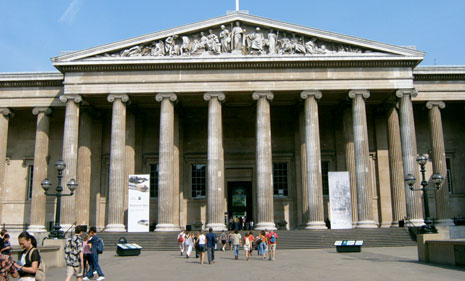
Petition: British Museum should have clear signage about Buddha’s birthplace

Posted by Ram Kumar Shrestha on April 16, 2012


1 Votes
To sign the petition please click here
Mr. Neil MacGregor,
Director, British Museum
Great Russell Street
London WC1B 3DG
Re: British Museum should have clear signage about Buddha’s birthplace
Dear Mr. MacGregor,
After British Museum notice on its Facebook wall “In light of recent comments about the Buddha’s birthplace, we would like to reassure you that the Museum does not state that the Buddha was born in India. We state that the Buddha was born into a small kingdom that flourished in north-eastern India in about 500 BC. The kingdom covered a reasonably wide area in the northern plains, along with several others of the time. When the Buddha’s mother was expecting, the family decided that she should proceed north to the hills to give birth. This she did, but gave birth along the way, in Lumbini at foot of the Himalayas. The site of Lumbini is in Nepal about 20 miles from the modern border with the Republic of India. If you are aware of an instance where the incorrect information is written or posted please let us know where so we can look into it. You are welcome to leave comments about this subject on the main wall but please note that comments about this subject on unrelated posts will be deleted as they are off topic. Please see further information about commenting in the info tab.” on 4th of November, 2011 there was flood of comments.
“In the spirit of clarity, the British Museum wants to be unambiguous and accurate on this issue – the Buddha was born in Lumbini which is in Nepal. The Museum is always seeking to find the clearest way to put past history into understandable statements in the Museum, on our website and in our online records. Thank you for your feedback. Please be assured this is an important issue to the Museum and has been passed on to our curatorial team to establish where further clarity in the Museum and online may be required.” – this was another notice from British Museum on 7th of November, 2011 on its facebook wall after flood of dissatisfied comments on its notice. 

Sushanta Khadka gets NASA award

Posted by Ram Kumar Shrestha on April 16, 2012


Rate This
KATHMANDU, APR 14 - Sushanta Khadka, a twelfth grader from the Sanga-based Nepal Police High School in Kavre, has won the second place in space settlement contest organised by National Aeronautics and Space Administration.
Five months ago, the Nasa announced the contest calling for concept papers for space settlement globally in which Khadka’s Gaganpur, the Sky City bagged the second award in the individual group. This is the first time a Nepali student has won the annual competition co-sponsored by Nasa Ames and for 6-12th graders (11-18-year-olds) from anywhere in the world. Individuals, small teams of two to six, and large teams of seven or more (often whole classrooms with teacher leadership) had participated in the contest. Grades 6-8, 9-10 and 11-12 were judged separately, except for the grand prize.

Saturday, July 30, 2011

Russian solar probe to predict Earthly cataclysms

Posted by Ram Kumar Shrestha on July 29, 2011
 
Rate This
Some scientists believe bursts of solar activity cause natural disasters on our planet, but until now the star has been too
Photo from www.nasa.gov
difficult to reach or explore in any detail. Some Russian researchers think they have the solution.
Volcanic eruptions, earthquakes, tsunamis – apocalyptic pictures are becoming an ordinary part of news bulletins across the globe. And scientists are not giving out reassuring forecasts.
“Unfortunately, we’re expecting more severe cataclysms which may lead to large-scale human losses and destruction,” says Baku-based Professor Elchin Kakhalilov of the Global Network for the Forecasting of Earthquakes.“I’m talking about even a possible shift of the centers of our entire civilization.”
The change in the Earth’s seismic activity coincides with the rise of activity on the sun. Scientists have been witnessing gigantic bursts of plasma on its surface and say they are affecting our planet, even though it is over 90 million miles away.
Each burst sends billions of particles into space which impacts the Earth’s magnetic field. This may trigger some of the processes going on deep bellow its surface, leading to earthquakes and volcanic eruptions.
Scientists predict solar activity will increase and say in the next few years, large-scale disruptions of electronic equipment, radio transmissions, computer failures and massive black-outs could become parts of everyday life.
The sun is currently monitored either by stations on Earth or in orbit. But sending a probe four times closer to the star would be far more helpful. And it may not be science fiction much longer, thanks to a project currently being developed by the Russian Academy of Sciences (RAS).

Russia eyes scientific mission to Venus

Posted by Ram Kumar Shrestha on July 29, 2011
 
Rate This
A leading Russian firm specializing in automated probes is preparing a mission to Venus. Planned for 2016, its mission is to study the planet’s turbulent atmosphere and surface, and find out why it has no water.
The preparation work on the spacecraft has started even though the contract for it has not yet been signed, told head and chief designer of the Lavochkin construction bureau Viktor Kharnov.
The Venera-D (Venus-D) station is to be launched in December 2016 and delivered to Venusian orbit in May 2017. It will be carried by a heavy Proton-M or Angara-A5 rocket.
The orbiting craft will launch a lander module and two atmospheric probes, which will gather samples of the atmosphere at altitudes of 55-60 km and 45-50 km. The orbiter will have scientific instruments of its own and will also relay data from the probes and the lander to Earth.

Beyond the Dalai Lama: Profiles of Four Tibetan Lamas-in-Exile

Posted by Ram Kumar Shrestha on July 29, 2011
 
Rate This
This is a guest post by Elizabeth Dias, a TIME contributor based in Washington.
When the Dalai Lama came to Washington this month, he wasn’t alone. Accompanying the spiritual leader of Tibetans-in-exile were a group of other leading rinpoches, or reincarnate lamas and teachers. These Tibetan clerics, or “precious jewels” as the term rinpoche means, often keep their national and international influences low profile. Kate Saunders, director of communications for the International Campaign for Tibet, says this in part because the “one thing virtually all Tibetans share is loyalty to the Dalai Lama.” Yet as His Holiness nears the twilight of his life, attention has already shifted to those who are shouldering the mantle of his spiritual leadership overseas — the Dalai Lama already ceded his political powers earlier this year. TIME caught up with four of these leaders to hear their own stories of Tibetan leadership.

Gomo Tulku Rinpoche (Photo: Courtesy Gomo Tulku Rinpoche)
Gomo Tulku Rinpoche, 22
A “Recording-Artist Rinpoche” may seem unlikely, but then you have Gomo Tulku Rinpoche. He hails from the same Gelugpa lineage as the Dalai Lama, who recognized Gomo Tulku’s reincarnation at age three.
While his previous incarnation reportedly enjoyed ritual dance and music, Gomo Tulku takes this passion to an entirely new level. Three years ago he quit the Sera Je Monastery in south India to pursue a music career in Italy. That was not an easy decision. Since age 7 he’d been trained to become a teaching monk. Without telling anyone, “I booked the tickets myself and I left,” he recalls. “Being a lama, if that is my role, as a teacher, then at least I need to know what life is.”
Today he has created his own sound, one that trades traditional chant for a fusion of contemporary hip-hop and R&B with some slash and pop, and on July 28, he is set to release his first single, “Photograph.” Gomo Tulku works with the Foundation for the Preservation of the Mahayana Tradition and its 160 centers worldwide even as he is busy “spitting lines.” Here’s the line he spit for TIME: “I’m constantly dazed and confused, I never cease to be amazed by the views.” It’s an impromptu composition, but nevertheless it reveals his honest approach of self-discovery. As he describes it, he is trying “to find myself in a different way and experience life and share it with my people” and to “have that direct interaction instead of being on the throne. I want to come down with you guys, just chill with you guys and talk.”

World Population Predicted to Hit 7 Billion This Year

Posted by Ram Kumar Shrestha on July 30, 2011
 
Rate This

By: 

If this keeps up, things are going to get crowded.
Stocktrek/ Getty IMages
A new study shows that the earth’s population will hit 7 billion in 2011, which is double what it was in the 1960s,
according to Discovery News. What’s more, researchers predict that another 2.3 billion people will be added to our planet over the next 39 years. In case you were wondering, that’s a lot of people in not a lot of time.
Worryingly, the study adds:

Tuesday, June 21, 2011

Women gain power in Brazil’s Planalto palace

Posted by Ram Kumar Shrestha on June 20, 2011
 
Rate This
Brazil’s first woman president now has ten women in her cabinet, two short of her 30 per cent target.
“]
Brazilian President Dilma Rousseff (R) greets presidency minister Gleisi Hoffman during her inauguration at Planalto palace, Brazil. [EPA
By appointing women to two key ministries this month, Brazilian President Dilma Rousseff has nearly met her goal of having a cabinet comprising at least 30 per cent women, with women in predominant roles at the Planalto Palace, the seat of government.
Rose Marie Muraro, a writer and pioneer of Brazil’s feminist movement in the 1970s who, like Rousseff herself, inspired many of the women in politics today, is enthusiastic.
“The hard core of power is in the hands of women, and that is very important,” said Muraro, who was declared by law a “National Patron of Feminism” by former president Luiz Inácio Lula da Silva (2003-2010).
Muraro is also a role model for women such as Gleisi Hoffmann, who was appointed chief of staff on June 7.
A lawyer and former senator, Hoffmann is nicknamed “the tractor” in the capital’s political circles because of her hard work and ability to get things done. She replaced Antonio Palocci, forced to resign over questions about the sudden 20-fold expansion of his personal fortune.
Although there is no proof of illicit enrichment, Palocci’s position as Rousseff’s “right-hand man” became politically untenable for the governing Workers’ Party (PT) and its allied political forces.

Nepal to build £1.9 billion ‘Buddhist Mecca’

Posted by Ram Kumar Shrestha on June 20, 2011
 
Rate This
China is providing funds to Nepal to build a $3 billion (£1.9bn) ‘Buddhist Mecca’ to attract millions of pilgrims and spiritual tourists to the birthplace of the religion’s founder Gautama, Lord Buddha.
China and Nepal signed an agreement earlier this year to develop the site in Lumbini Photo: REX
By Dean Nelson, New Delhi, Peter Foster in Beijing
Lumbini is a Unesco world heritage site that attracts half a million pilgrims every year from China, India, Japan, Sri Lanka and Thailand to its sacred ponds, gardens and temples.
Planners hope to build an airport, hotels, convention centres, new highways, temples and a Buddhist university at the site on Nepal’sWestern border with India, where Lord Buddha was born about 2,600 years ago.
The scheme is supported by a Chinese government-backed foundation and has brought together an unlikely alliance of Nepali government ministers, Prachanda, the former prime minister and leader of the Maoist insurgency, and Paras, the former crown prince, whose family Prachanda ousted from power.
It also has the support of Steven Clark Rockefeller, the heir to the Rockefeller dynasty. According to Nepali officials devout Buddhists spend more time at the other three main pilgrimage sites in India because Lumbini does not have the infrastructure necessary for longer stays.
Sarnath, in India’s Uttar Pradesh, where Buddha first taught “dharma” or natural law, Bodh Gaya in Bihar, where he found enlightenment under the Bodhi tree and Kushinagar where he found “nirvana” in death, are all drawing increasing numbers of high-spending tourists, and Nepal’s government wants to increase its share of the spoils.

Another Chinese foundation plans to raise $ 3b to make Lumbini ‘magnet for Buddhists’

Posted by Ram Kumar Shrestha on June 20, 2011
 
Rate This
Months after plans of a Chinese private sector company to invest Rs 8 billion to develop Lumbini as an International
Buddha Center hogged media headlines there comes news that a Chinese-backed foundation is planning to raise $ 3 billion to help Nepal develop Buddha’s birthplace.
According to Reuters, the Asia Pacific Exchange and Cooperation Foundation plans to raise the aforesaid amount at home and abroad “to build temples, an airport, a highway, hotels, convention centres and a Buddhist university in the town of Lumbini.”
Interestingly, UCPN (Maoist) chairman Pushpa Kamal Dahal is the vice-chairman of the foundation which aims to transform Lord Buddha’s birthplace in southern Nepal “into a magnet for Buddhists in the same way as Mecca is to Muslims and the Vatican for Catholics”, the report adds.
The foundation signed a memorandum of understanding with Nepal government last month to jointly develop and operate Lumbini.

Tuesday, June 14, 2011

The man who screwed an entire country

Posted by Ram Kumar Shrestha on June 11, 2011
 
Rate This
The Economist
The Berlusconi era will haunt Italy for years to come
SILVIO BERLUSCONI has a lot to smile about. In his 74 years, he has created a media empire that made him Italy’s richest man. He has dominated politics since 1994 and is now Italy’s longest-serving prime minister since Mussolini. He has survived countless forecasts of his imminent departure. Yet despite his personal successes, he has been a disaster as a national leader—in three ways.
Two of them are well known. The first is the lurid saga of his “Bunga Bunga” sex parties, one of which has led to the unedifying spectacle of a prime minister being put on trial in Milan on charges of paying for sex with a minor. The Rubygate trial has besmirched not just Mr Berlusconi, but also his country.
However shameful the sexual scandal has been, its impact on Mr Berlusconi’s performance as a politician has been limited, so this newspaper has largely ignored it. We have, however, long protested about his second failing: his financial shenanigans. Over the years, he has been tried more than a dozen times for fraud, false accounting or bribery. His defenders claim that he has never been convicted, but this is untrue. Several cases have seen convictions, only for them to be set aside because the convoluted proceedings led to trials being timed out by a statute of limitations—at least twice because Mr Berlusconi himself changed the law. That was why this newspaper argued in April 2001 that he was unfit to lead Italy.

Preparing for the next-generation of spaceflight

Posted by Ram Kumar Shrestha on June 11, 2011
 
Rate This
New Scientist
Caitlin Stier, contributor
(Image: Lockheed Martin)
As the shuttle programme draws to a close, NASA has contracted Lockheed Martin to develop a next-generation vehicle for deep space exploration. Here, the Multi-Purpose Crew Vehicle (MPCV), unveiled in May, is undergoing tests at the Lockheed Martin Vertical Test Facility in Colorado to ensure it can withstand the harsh conditions of deep space expeditions.
Whereas the shuttle programme focused on low-Earth orbit, the new spacecraft is designed to explore further afield possibly to an asteroid or Mars.
Lockheed Martin was commissioned after the Obama administration scrapped the moon-bound Constellation programme, and MPCV resurrects designs from the Orion capsule, affiliated with Constellation.

Which technology do you think will have the biggest impact on human life in the next 30 years?

Posted by Ram Kumar Shrestha on June 11, 2011
 
Rate This

New Scientist

And the winner is…

The clear winner with 3,097 votes – 35 per cent of the total – is Catherine McTeigue’s prediction of nanorobots that will repair cancerous cells:

Nanorobots fight the medical battles of the future

“Say the word “cancer” and people are fear-ridden. Projects being undertaken to harness nanotechnology and develop nanorobots to enter into the human body and repair cancerous cells, without the need for life-changing, disfiguring and painful chemotherapy, will have the greatest impact in the next 30 years. Watching loved ones suffer will be a thing of the past as the robots aid speedy recoveries, mortality rates drop, and as the technology is used more frequently, so will the cost, that oft deciding factor. An enormous step forwards for all mankind, in the form of a microscopic creature.”
Catherine is a 30-year-old wine buyer from Leeds in the UK. “I am incredibly excited to have won,” she told New Scientist.
Catherine’s prize is a trip to Svalbard, in the Arctic Circle north of the Norwegian mainland, to visit Statoil’s giant Troll gas platform, where she will descend to the bottom of the North Sea. “I will attempt to learn some Norwegian between now and then,” she said.

China’s ‘Wealth Drain’: New Signs That Rich Chinese Are Set on Emigrating

Posted by Ram Kumar Shrestha on June 13, 2011
 
Rate This
This post is in partnership with Worldcrunch, a new global—news site that translates stories of note in foreign languages into English. The article below was originally published in Economic Observer.
BEIJING — Is China facing a “Wealth Drain”? Do too many of the best and brightest — and above all, richest — Chinese dream of packing up their accumulated capital, and going to live abroad?
According to a new study, a majority of Chinese who have more than 10 million Yuan ($1.53 million) worth of individual assets find the idea of real—estate investment a lot less tempting than so—called “investment emigration.” Nearly 60% of people interviewed claim they are either considering emigration through investment overseas, or have already completed the process, according to the 2011 Private Wealth Report on China published by China Merchants Bank and a business consulting firm Bain & Company. The richer you are, the study suggests, the likelier it is that you resort to emigration. And among those who possess more than 100 million yuan, 27 % have already emigrated while 47% are considering leaving.(See: “On the Cutting Edge — China’s Extraordinary Buildings”)
The fact that more and more rich Chinese are seeking to emigrate is turning into a hot topic in China, and statistics prove that the trend is a real one. According to Caixin online, a Chinese website specialized in finance, the compound annual growth rate of overseas investment by Chinese individuals approached 100% between 2008 and 2010. The compound growth rate of the Chinese who used investments to emigrate to the United States in the past five years is 73%.
So why are wealthy Chinese so eager to leave their country? The simplest answer is that there are a lot of things in China that even the richest cannot buy (emigration is obviously not one of them). China’s rich are fond of saying that nothing “is a problem if money can solve it.” Among the irresolvable problems that spark emigration, there are material ones, and emotional ones.